PLIK NANGGULAN 2 - SHOWROOM PETANI & UMKM KULON PROGO

PLIK NANGGULAN 2 MELAYANI:INTERNET-SALES-SERVICE-TRAINING-CONTENT DEVELOPMENT-SHOWROOM PETANI DAN UMKM UNTUK JASA PELAYANAN HUBUNGI PLIK NANGGULAN 2 DESA BANYUROTO KECAMATAN NANGGULAN KABUPATEN KULON PROGO DIY 55671-BERSAMA KITA MEMBANGUN EKONOMI RAKYAT

Wednesday, 15 October 2014

Selamat Hari Jadi Kabupaten Kulon Progo ke - 63


SELAMAT HARI JADI KABUPATEN KULON PROGO KE 63, 15 OKTOBER 2014, SEMOGA SEMAKIN MAJU RAKYATNYA SEJAHTERA, AMAN TENTRAM DAN DAMAI.

Tuesday, 14 October 2014

Menuju Indonesia yang Makin Efisien


Siapapun tentu sepakat, bahwa pembangunan tahun 2015 s/d 2019 adalah pembangunan kompetitif perekonomian yang berbasis sumber daya alam yang tersedia, sumber daya manusia yang berkualitas, serta kemampuan ilmu pengetahuan dan teknologi.

Dalam kondisi ini tidak ada pilihan lain bagi peningkatan penggunaan jaringan pita lebar 
(broadband) di tiga platform ini yang efeknya akan meningkatkan kedayagunaan dan ketepatgunaan proses dan hasil pembangunan.

Ini juga searah dengan fakta geografis bahwa konektivitas bagi Indonesia sebagai negara kepulauan terkadang sulit diwujudkan melalui pembangunan infrastruktur fisik, tetapi dimungkinkan melalui infrastruktur komunikasi maya, terutama jaringan koridor pita lebar 
(broadband).

Gambaran tersebut adalah kondisi ideal. Tetapi faktanya, Indonesia belum masuk ke dalam negara dalam kelompok yang digerakkan oleh efisiensi 
(efficiency-driven).

Penyebabnya karena teknologi informasi komunikasi (TIK) Indonesia belum secara optimal berkontribusi kepada peningkatan daya saing bangsa. Tingkat penetrasi internet dan fixed broadband termasuk yang relatif rendah di kawasan.

Infrastruktur TIK Indonesia saat ini belum berkontribusi secara optimal terhadap peningkatan daya saing nasional. Untuk itu, akselerasi pembangunan broadband sangat diperlukan.

Monday, 22 September 2014

E-Blusukan ala Jokowi


Joko Widodo atau Jokowi dikenal dengan gayanya yang gemar blusukan untuk mengetahui masalah di masyarakat. Hal itu sudah dilakukannya sejak menjadi Walikota Solo dan dilakukan kembali saat menjadi Gubernur DKI Jakarta.

Kini, ketika ia menjadi presiden terpilih, blusukan tidak akan ditinggalkan. Namun, Jokowi menyadari tidak mungkin untuk blusukan keliling Indonesia. Oleh karena itu, ia membuat gebrakan baru dengan menghadirkan e-Blusukan.

"Bicara mengenai nanti sosmed untuk menjelaskan program kita pada masyarakat, tadi juga dibicarakan mengenai e-Blus," ujar Jokowi di Rumah Transisi, Jakarta, Kamis 7 Agustus 2014.

Program itu masih akan terus dibahas. Jokowi pun menerima kedatangan para pegiat media sosial untuk menciptakan program blusukan ini.

"E-Blusukan, kira-kira itu. Saya kalau blusukan ke seluruh provinsi kabupaten dan kota kan tidak memungkinkan. Kira-kira begitu, masih dalam penggodokan, pengolahan," imbuhnya.

Untuk bentuk programnya, Jokowi masih belum tahu. Bisa saja program blusukan itu seperti konferensi video. Yang pasti, Jokowi ingin bisa mendengar masukan dari seluruh rakyat Indonesia.

"Ya, medsos nanti akan betul-betul kita gunakan untuk mendengarkan suara rakyat, tidak harus ketemu langsung, bisa lewat
Twitter dan Facebook," tegas Jokowi.

Jokowi menambahkan meski program e-Blusukan sudah ada, blusukan secara langsung tetap akan dilakukan. Jokowi sadar aplikasi tersebut hanya menjangkau kalangan menengah ke atas.

"Ya, untuk anak-anak muda mungkin bisa, kota-kota mungkin bisa, di desa kita (blusukan) langsung," tandas Jokowi.

Sumber : Liputan 6.com

Desa Merupakan Akar dari Suatu Negara


Sebuah negara yang memiliki wilayah luas seperti Indonesia tentu memiliki keaneragaman budaya dan potensi di dalamnya. Semua itu terletak di sebuah wilayah yang paling kecil dari sebuah negara, yaitu  desa.
Desa seringkali luput dari pemberitaan publik, padahal desa itu merupakan akar dari suatu negara khususnya Indonesia. Apabila potensi yang ada di seluruh desa dapat dimaksimalkan, tentunya pembangunan di negeri ini akan semakin lebih mudah.
Membangun suatu negara memang harus dimulai dari yang terkecil yaitu desa. Apabila desa-desa sudah mandiri dan saling berkontribusi, tentunya akan berdampak pada Negara secara menyeluruh.
Oleh karena itu jangan lupakan desa, karena desa akar dari suatu negara.

Tuesday, 19 August 2014

Undang Undang No 6 Tentang Desa

Sumber : http://peraturantentangdesa.blogspot.com/search?updated-max=2014-04-17T11%3A13%3A00%2B07%3A00&max-results=1

http://peraturantentangdesa.blogspot.com/

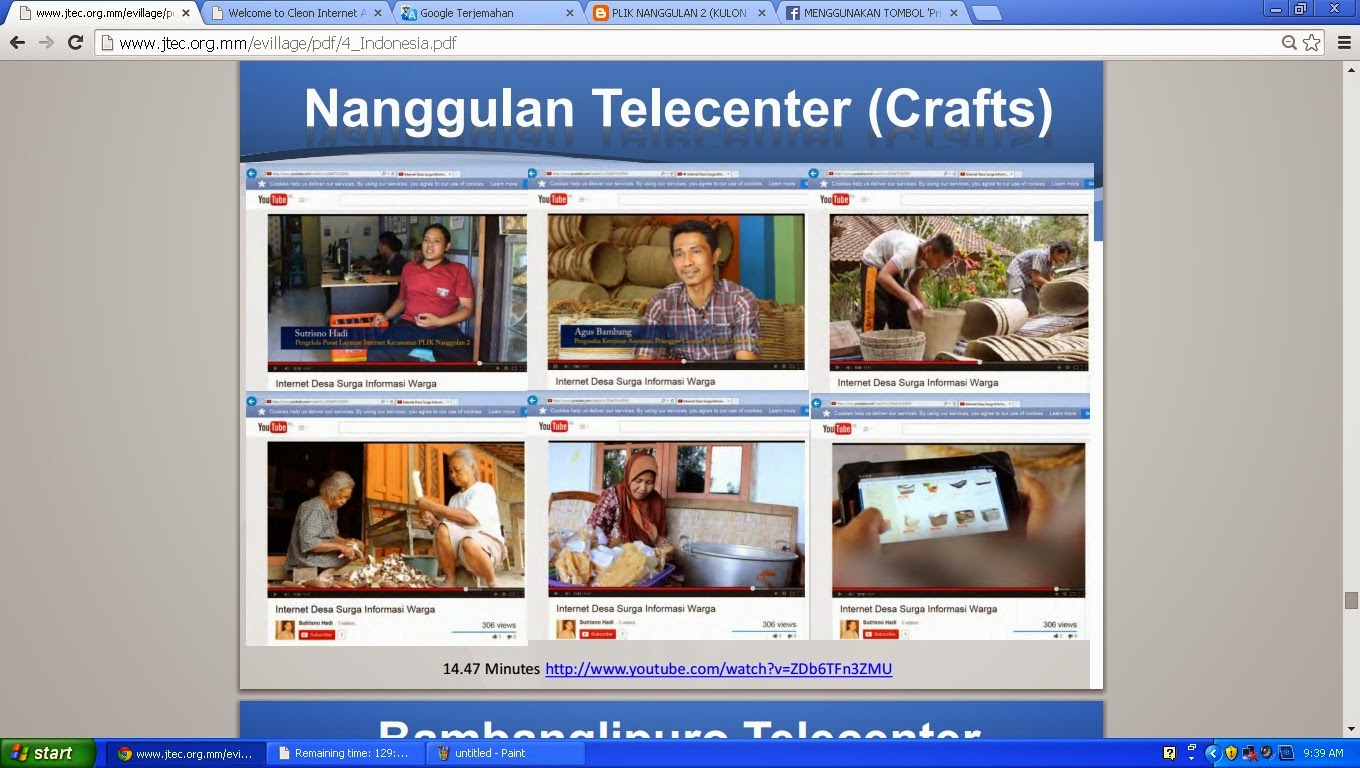
Nanggulan Telecenter ( Craft )


sumber: www.jtec.org.mm/evillage/pdf/4_Indonesia.pdf
 Telecenter Rural tidak hanya proyek untuk umum 
layanan, tetapi bagian dari transformasi Program nasional 


Thursday, 17 July 2014

News in Indonesia unicef​​, volunteer facilitator at the same PLIK Nanggulan 2 family program hopes to prevent child neglect and exploitation through family development sessions


From UNICEF Indonesia

By: Astrid Gonzaga Dionisio, Child Protection Specialist

Yogyakarta, June 2014 - When I attended a discussion on child protection in Yogyakarta recently, one of the participants really stood out.

Ibu Prihatin is a mother of three and a graduate of junior high school from Kulon Progo District. She understands very well what is needed to provide her children with all the support they need to succeed in school – and she loves to talk about it.

“We have to make sure they have breakfast in the morning and that their uniforms are clean and in order,” she said when participants were asked to discuss how to prevent neglect.

Ibu Prihatin has been participating in the Family Hope Programme (PKH - Program Keluarga Harapan) since 2008. Through the programme, the Indonesian government provides conditional cash transfers to the poorest families to improve their access to health and education services.


One of the conditions is that family members attend these kind of family development sessions to better understand the impact of child neglect and how to prevent it.  They also learn about the risks of exploitation, be it for labour or even worse for prostitution.

Ibu Prihatin read out result from group discussion on what needs to be done to prevent child neglect.
© UNICEF Indonesia/2014/Astrid Dionisio

Children have a right to basic necessities like food, clothing, shelter and education. And they have a right to be protected from all forms of exploitation and abuse. However, parents are often not aware of the risks and the impact of neglect and exploitation.

Ibu Prihatin said this was the first time she had heard such subjects discussed.

“The topics are interesting,” she said. “I have learned many things that will help me bring up and nurture my children better, so they can succeed in their education and are prepared for their later life.”

She hopes the family development sessions will help prevent child neglect and exploitation in the community and she wants to support her three children to attain higher education.

Apart from the child protection modules, beneficiaries of the PKH programme must also attend sessions that focus on education, health and nutrition as well as economic empowerment.

UNICEF has helped to develop these sessions. The discussion I attended, on child protection, was a field test to see how much the participants learned about the subject.

In future, family development sessions will be run by the PKH facilitators.

One of them is Sapti Puji Rahayu who was recruited in 2008 for Kulon Progo district, covering 180 beneficiary households.

Sapti Puji Rahayu, PKH Facilitator in Kulon Progo, Yogyakarta.
© UNICEF Indonesia/2014/Astrid Dionisio

Sapti ran the fielding testing session that I attended.  

She said discussing all topics on violence, exploitation and neglect were relevant and important for protecting children.

“I have found such cases in our community, and children are suffering,” she said. “It is important that parents are aware of the risks and the consequences.”

Sapti says she found some children in the community who were working instead of going to school. Others dropped out of classes because their parents weren’t making sure they attended.

Sapti has enjoyed working with vulnerable members of the community. “My most memorable experience was my success in helping a family to obtain their civil registration documents including birth registration for their children so they could access education and other services.” 

Sapti Puji Rahayu (standing) facilitates the discussions with PKH beneficiaries.
© UNICEF Indonesia/2014/Astrid Dionisio

After seeing the family development session in action, I feel optimistic. The group was open to talking about sensitive issues like child exploitation and neglect. Changing this will take time, but the sessions definitely make a difference and I am proud that we at UNICEF can help make them as effective as possible.

We need more Saptis who are willing to listen, work and stay in the community to create change for the most vulnerable groups, especially children.